

Purpose: MA Capstone Project
Year: 2025
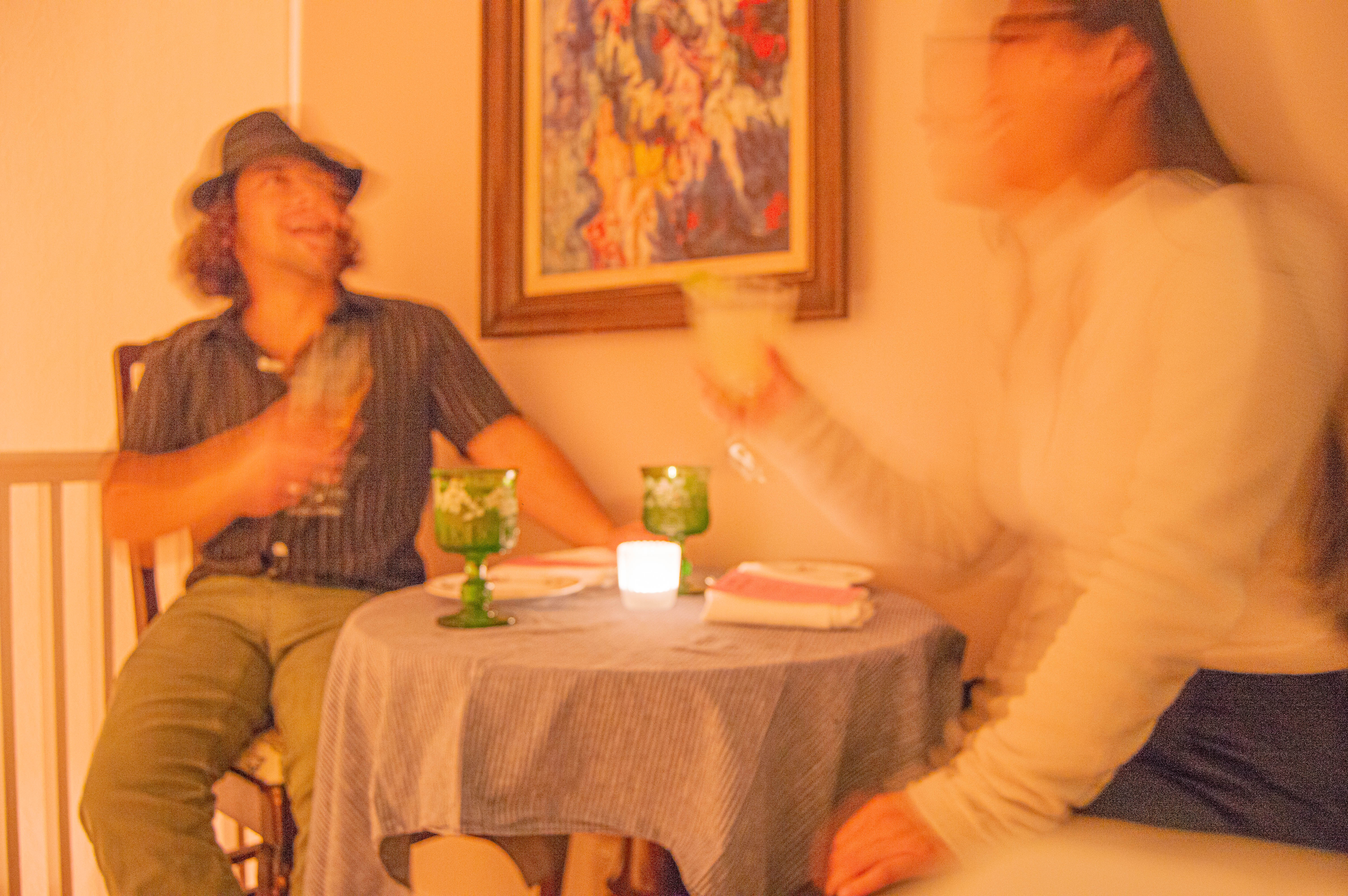

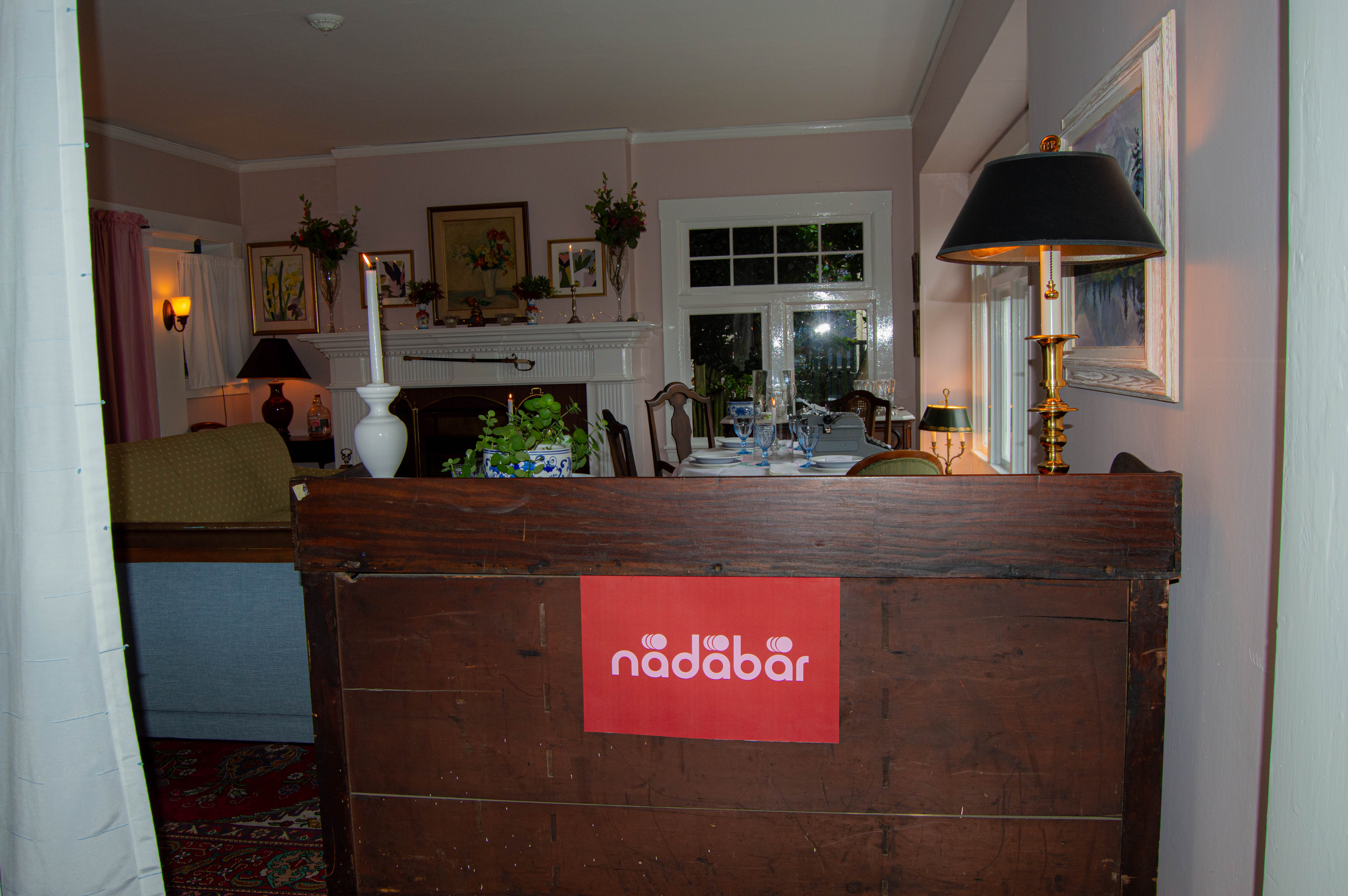

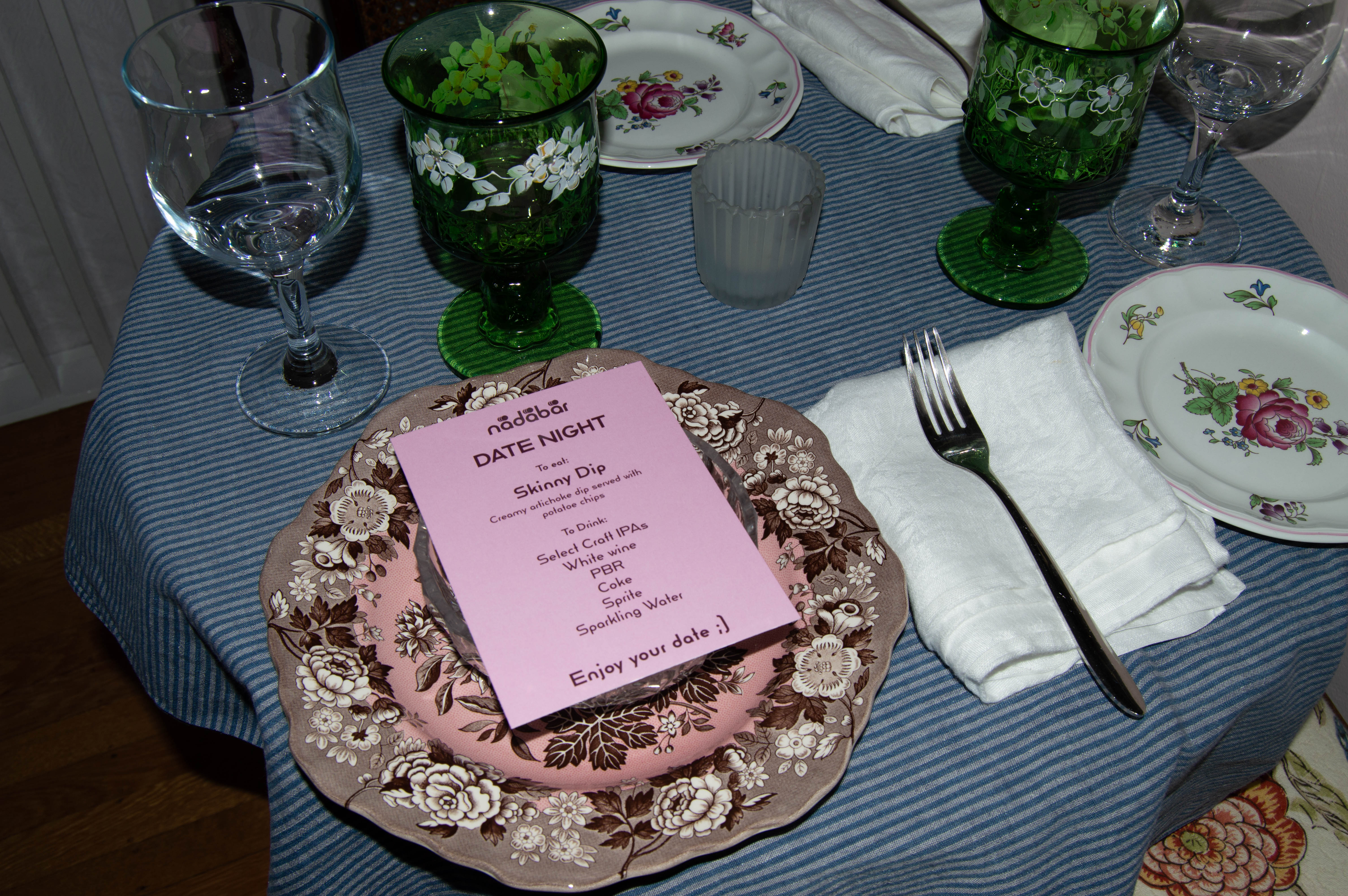

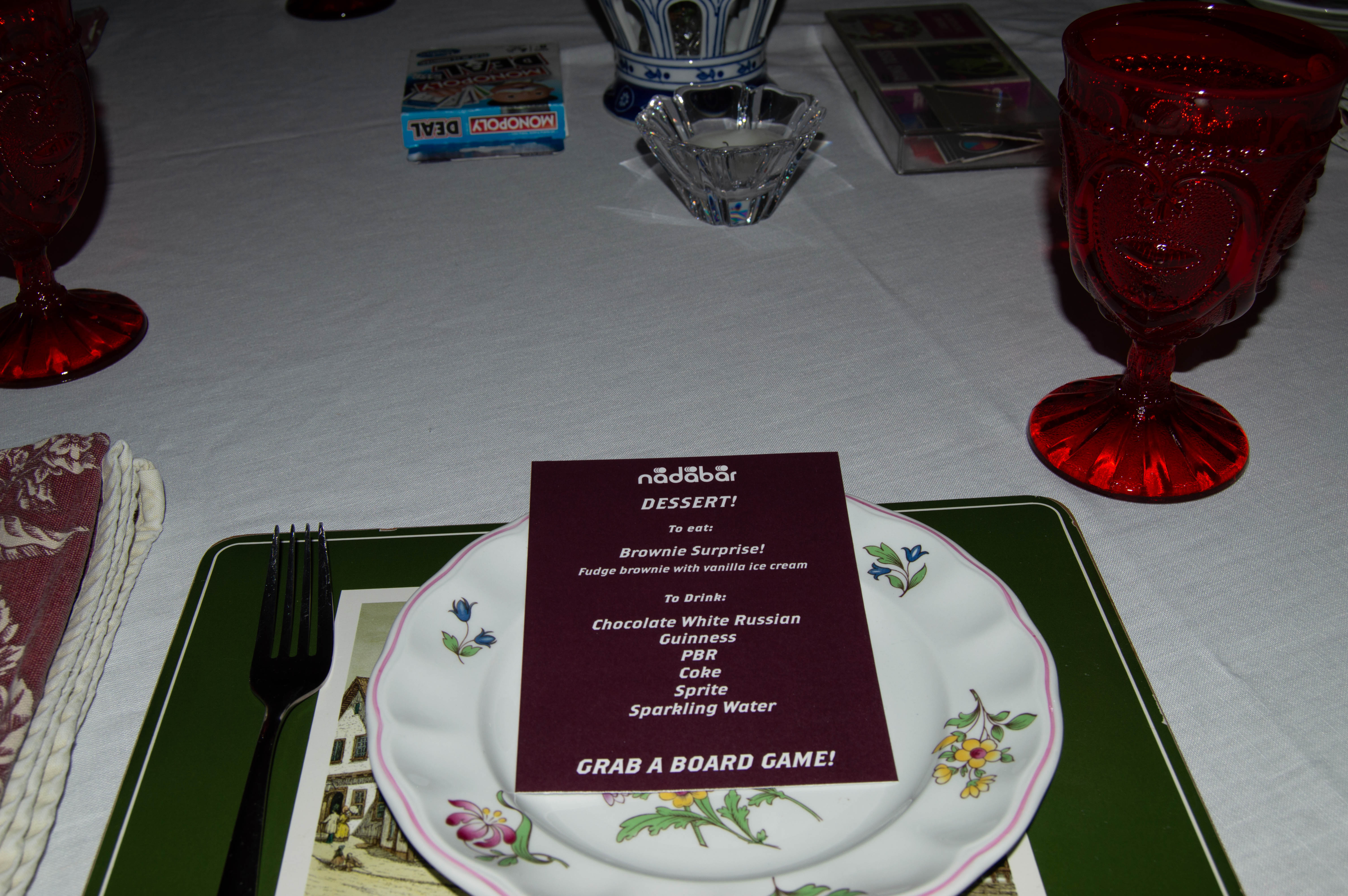
Objective
For the scope of the MA Design Management capstone, this project focuses on the general trend of a more sober Gen Z. As alcohol consumption among people in their 20’s decreases, a problem emerges:
What does the weekend look like if bars and drinking are not the main focus for US Gen Z?
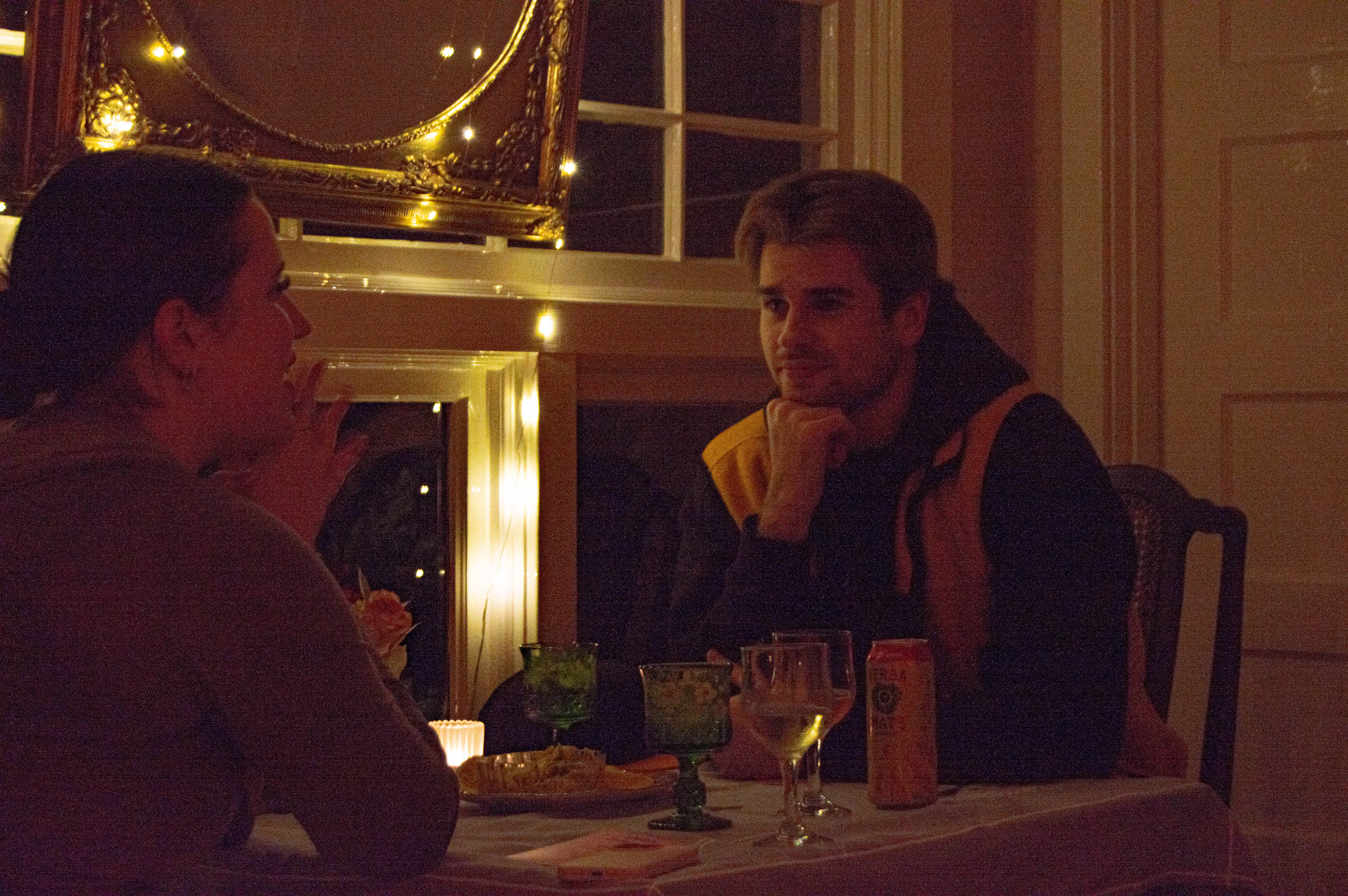
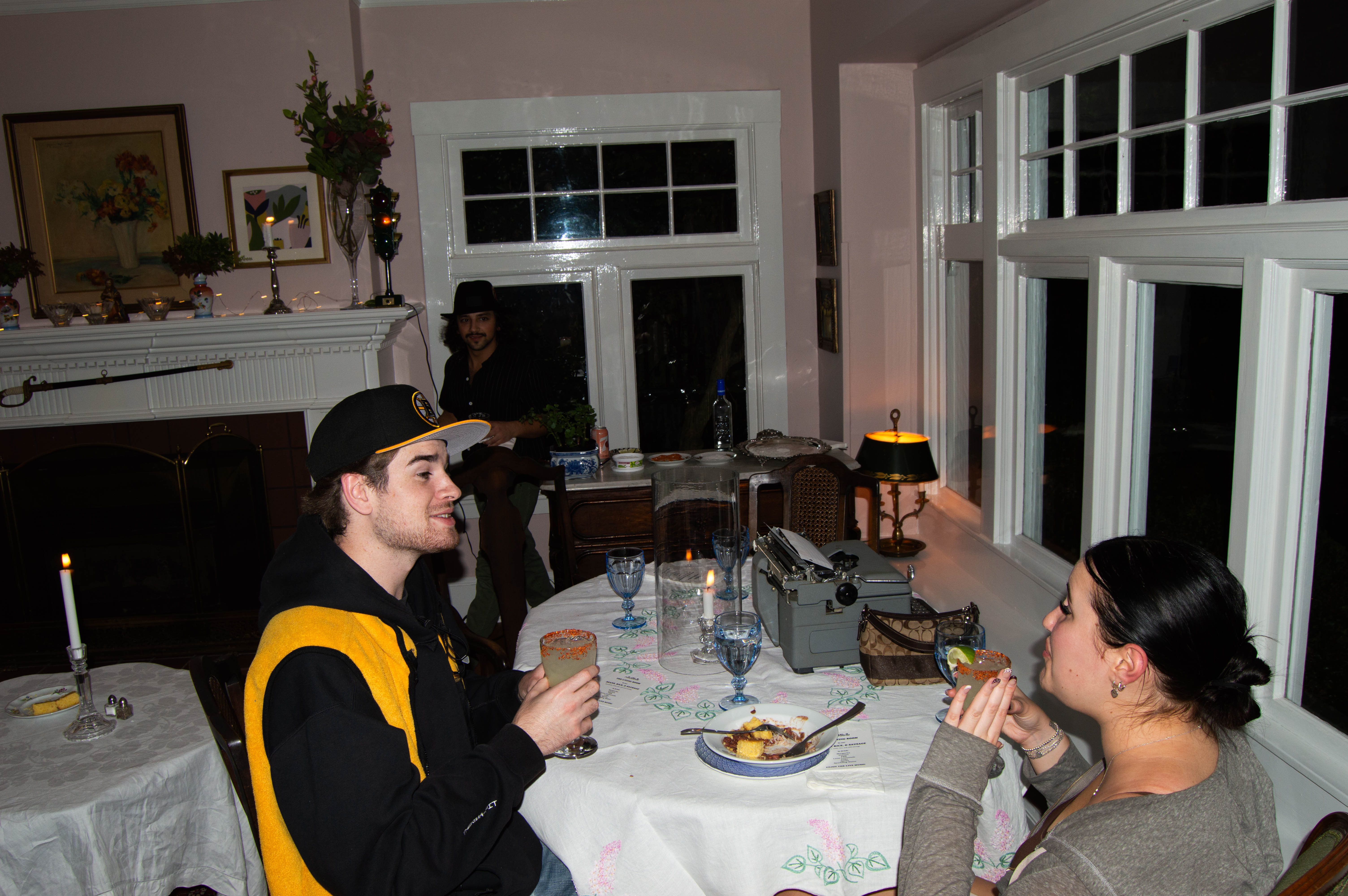
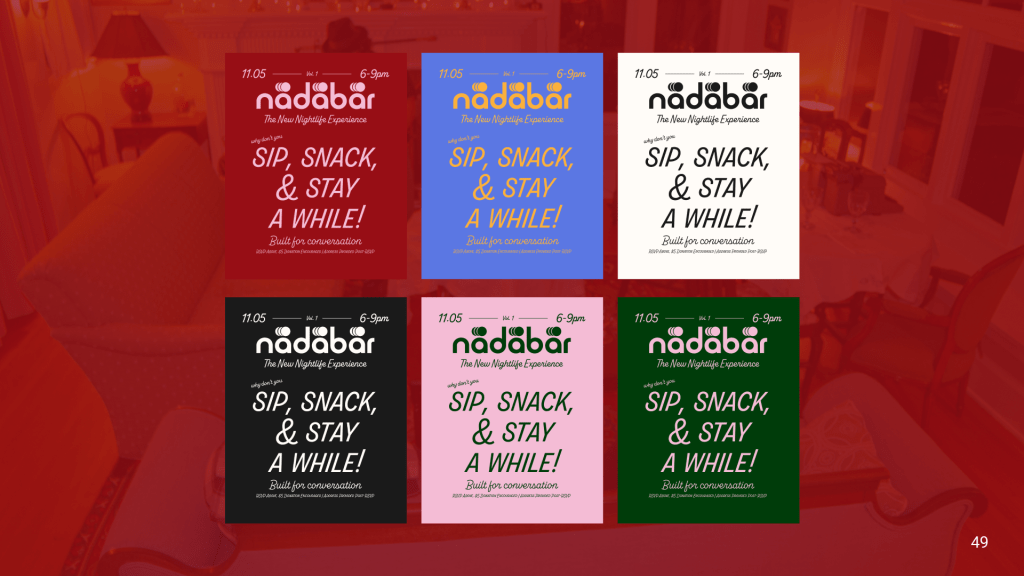
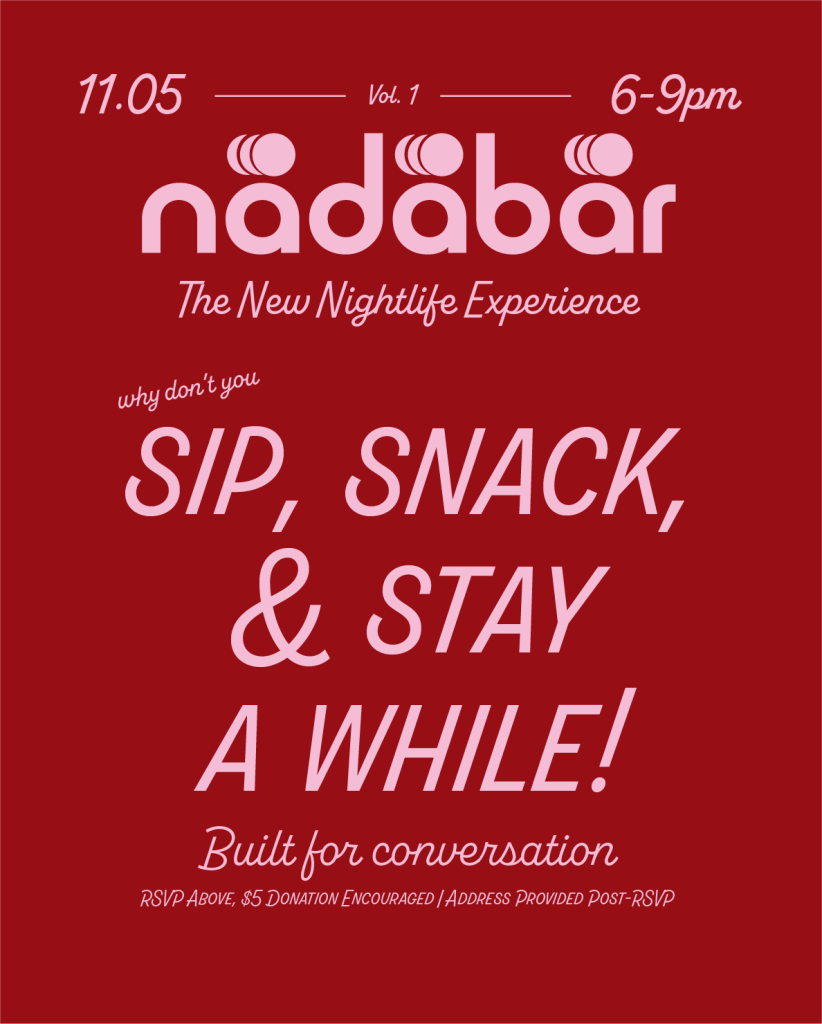
That’s where “nadabar” comes in. This project will give 21-30 year old’s the solution to their desire for more authentic experiences, while also creating an affordable and fun outlet that decenters from the alcohol nightlife culture.
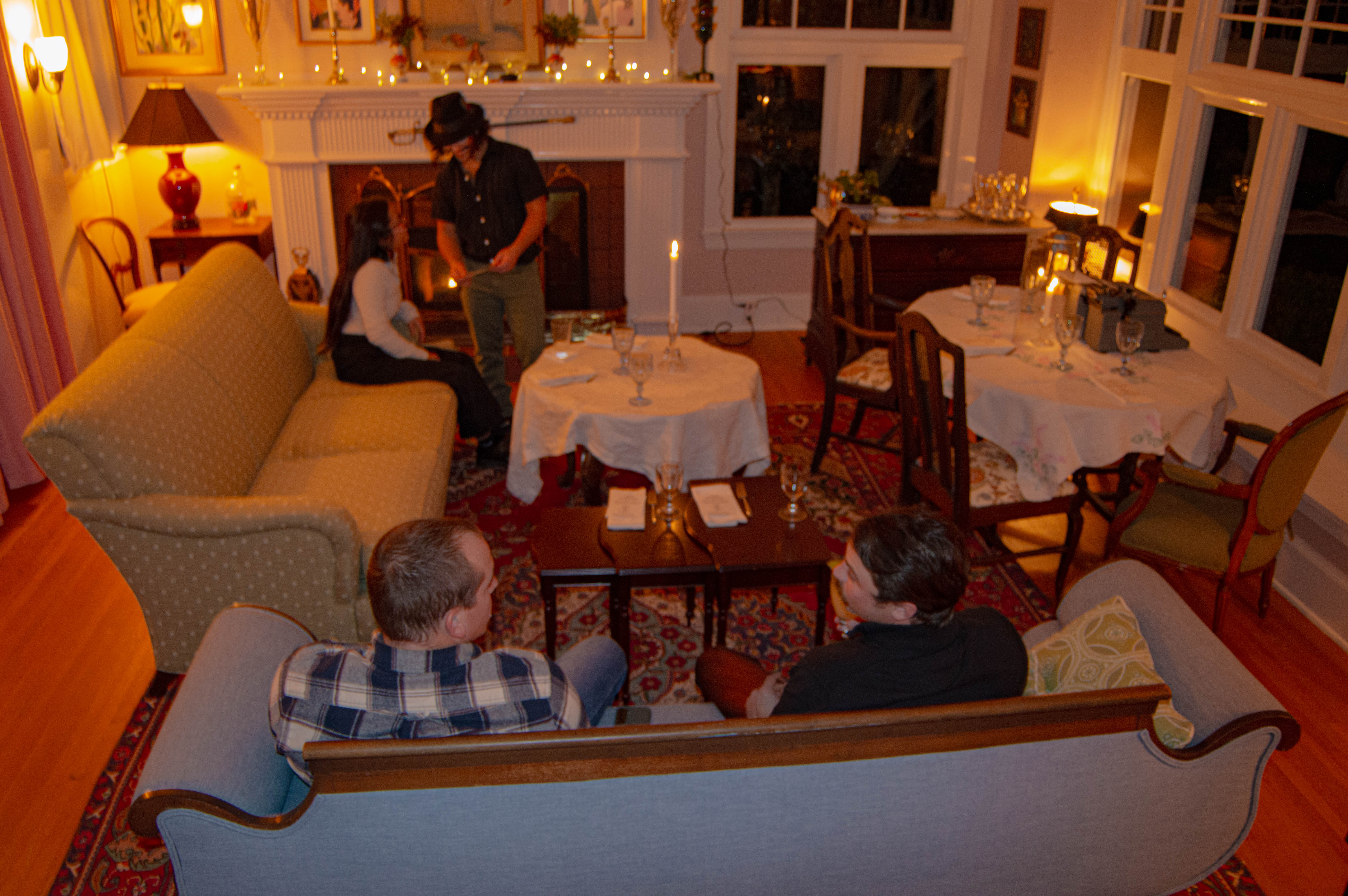
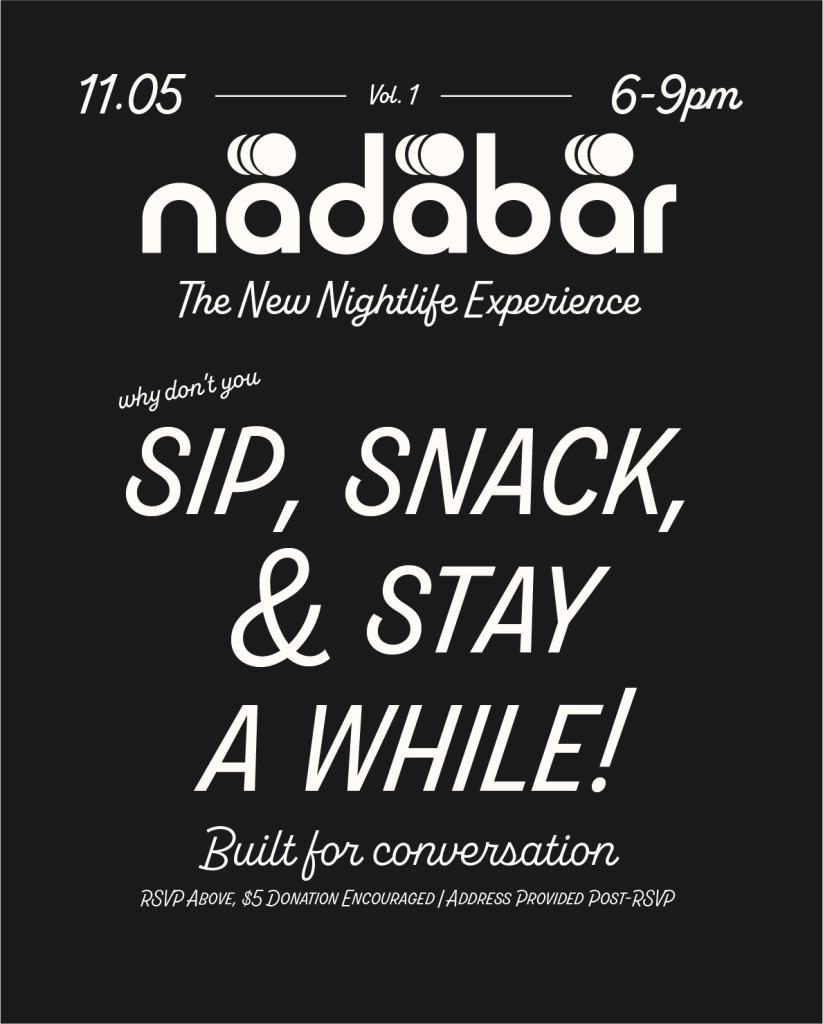
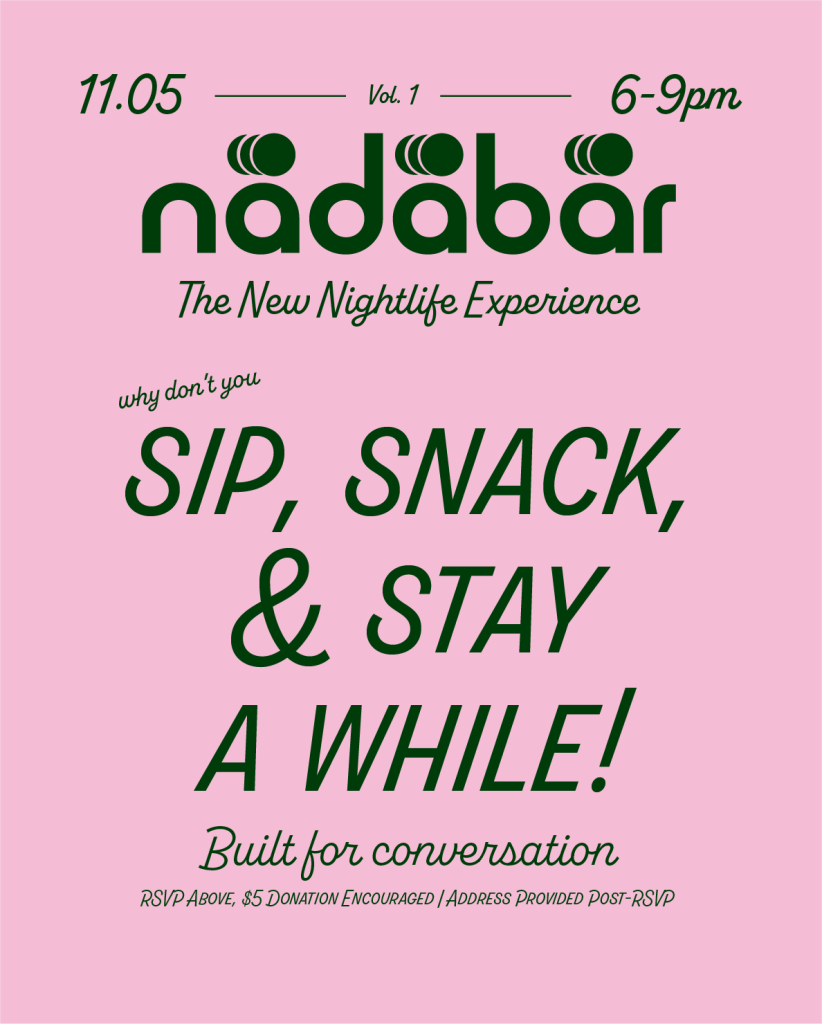
Nadabar is a space with a variety of intimate nightlife experiences curated to the vibe, tastes, and budget of each customer, with a strong commitment to community outreach and relationship building.











The Process
Primary Research
Survey
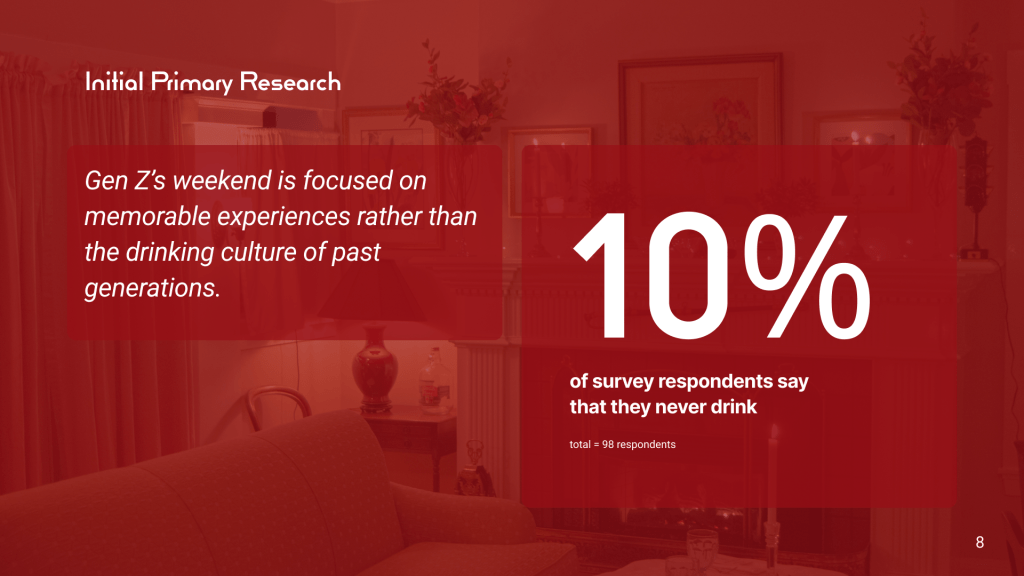
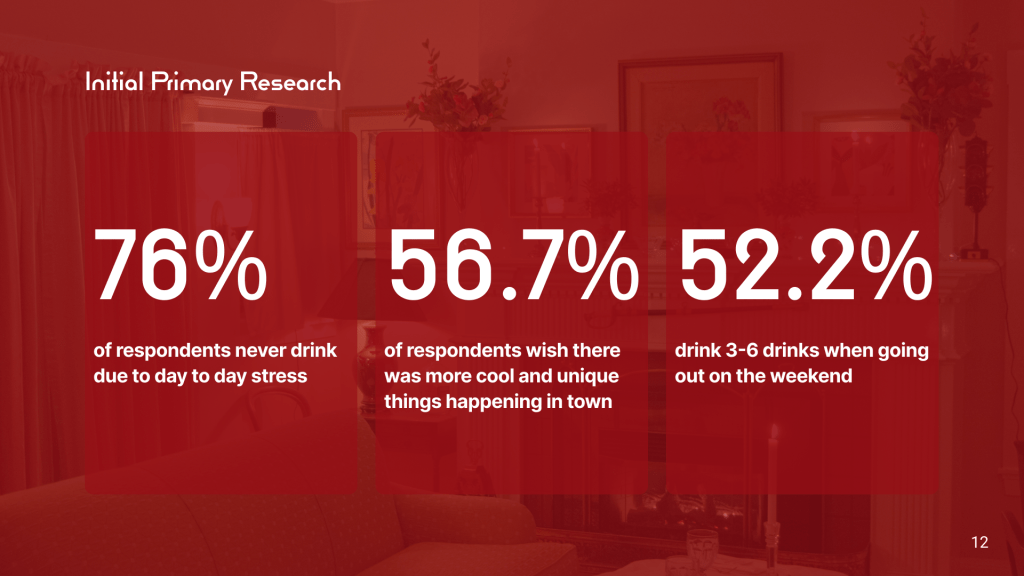
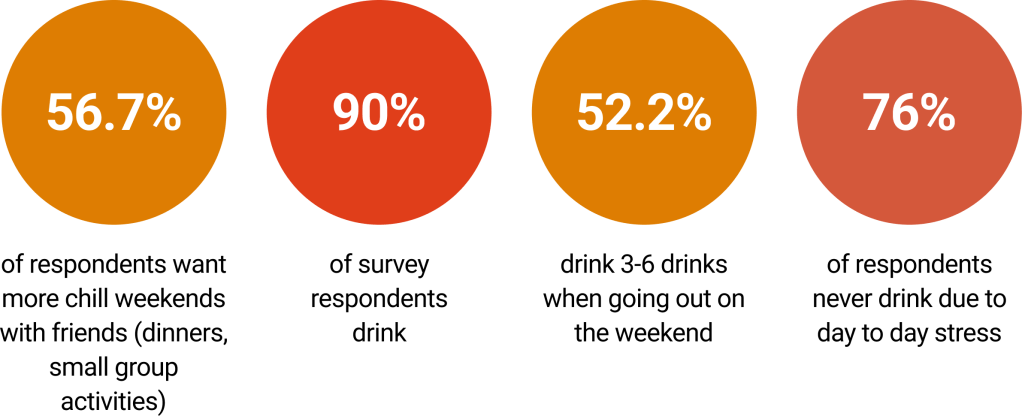
Using the user group from secondary research, a survey was developed to find and define a few key trends. These key trends look into the actual habits of the users to understand if they are really drinking less. It was essential to make this survey anonymous so that the survey respondents were as honest as possible.

Interviews
After these initial surveys, interviews were conducted to dig deeper into those survey results. There were two types of interviews: a traditional question and answer, and a group storyboarding interview.
The traditional question and answer was reserved for bartenders and bar owners, while the group storyboarding was for users. Both produced interesting insights into the weekend experience at bars and helped inform the solution as a whole
User Insights:

Bartender Insights:

Bar Owner Insights:

Customer Profiles
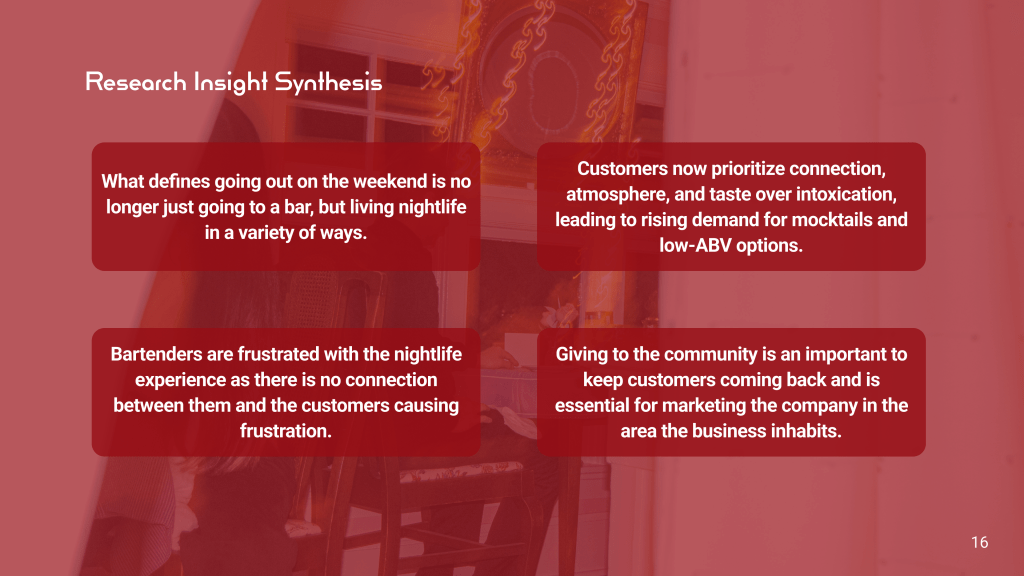
Using data points from the primary and secondary research, four distinct customer profiles were developed. These profiles helped dig deeper into the feelings and emotions of the target users and potential customers of the final design.



Insights and Design Opportunities
The insights from the primary and secondary research helped develop some opportunity spaces and how might we questions. These questions and opportunities will help develop that value proposition.
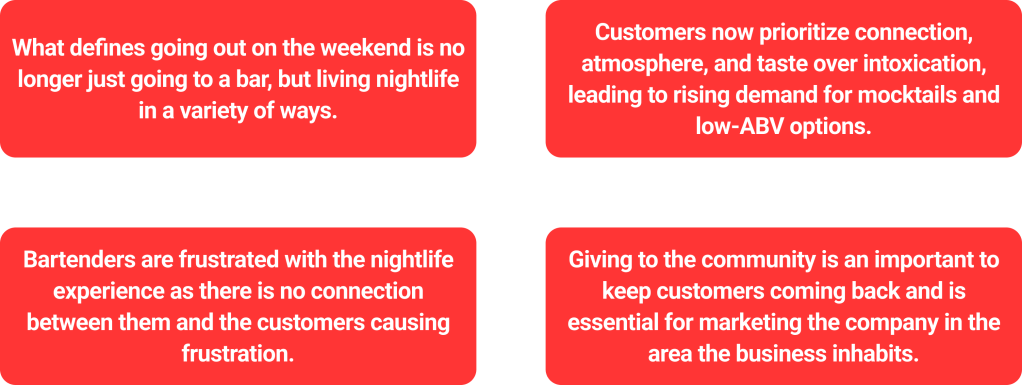
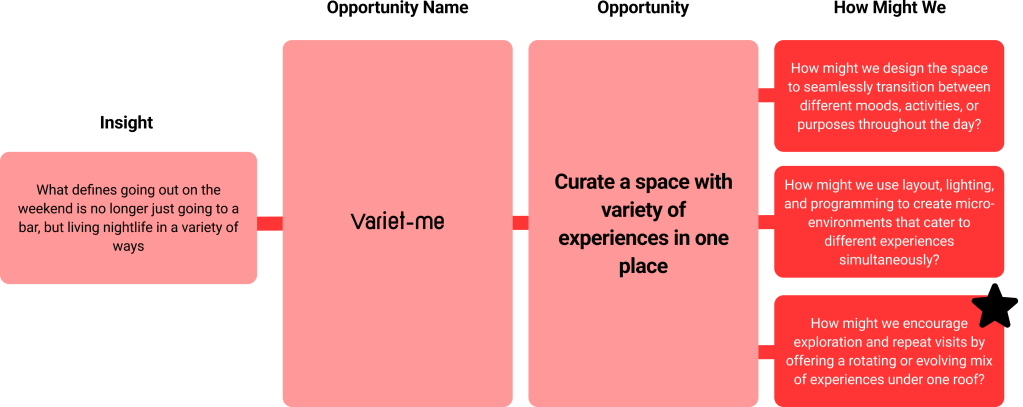

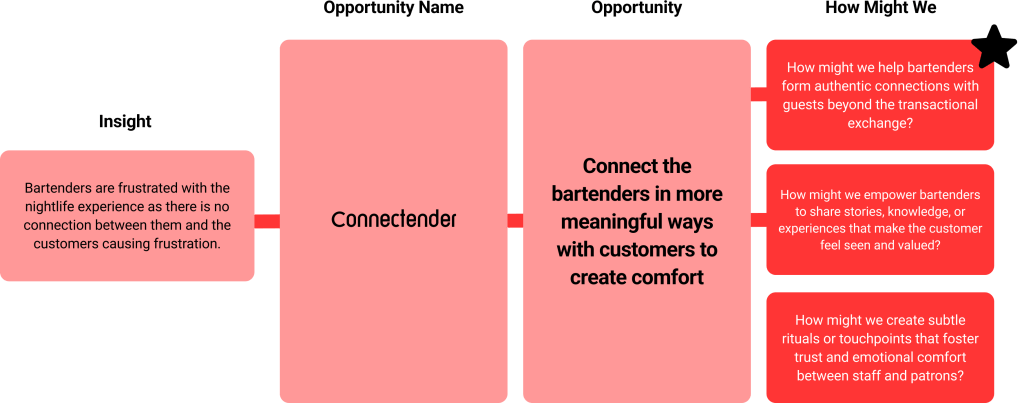
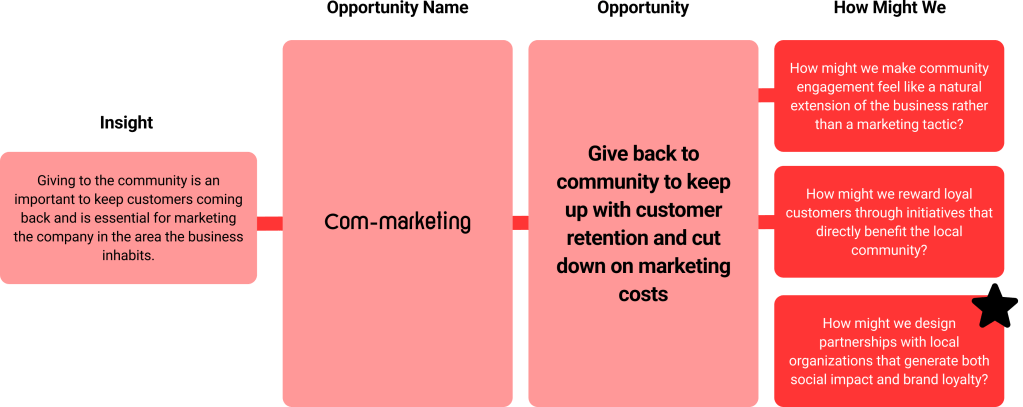
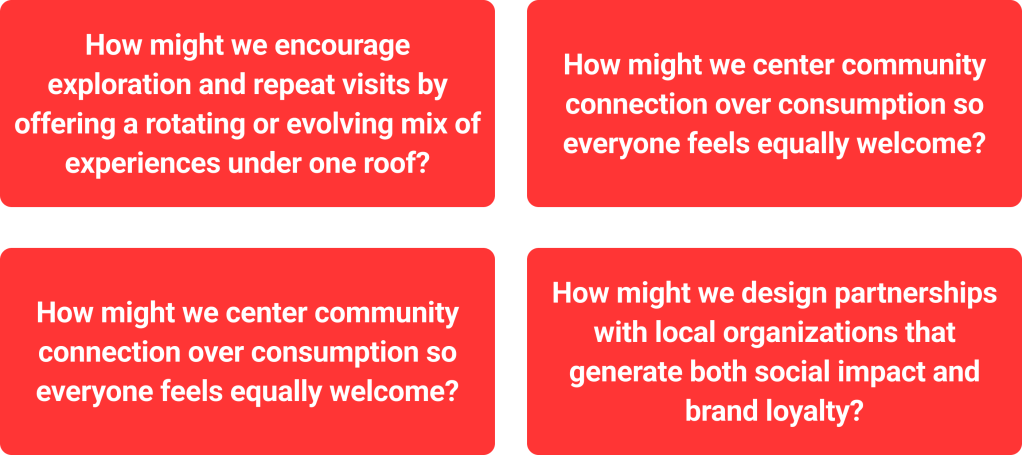
Four different how might we questions were developed to further understand the business and the opportunity
Cross-Cultural Perspective
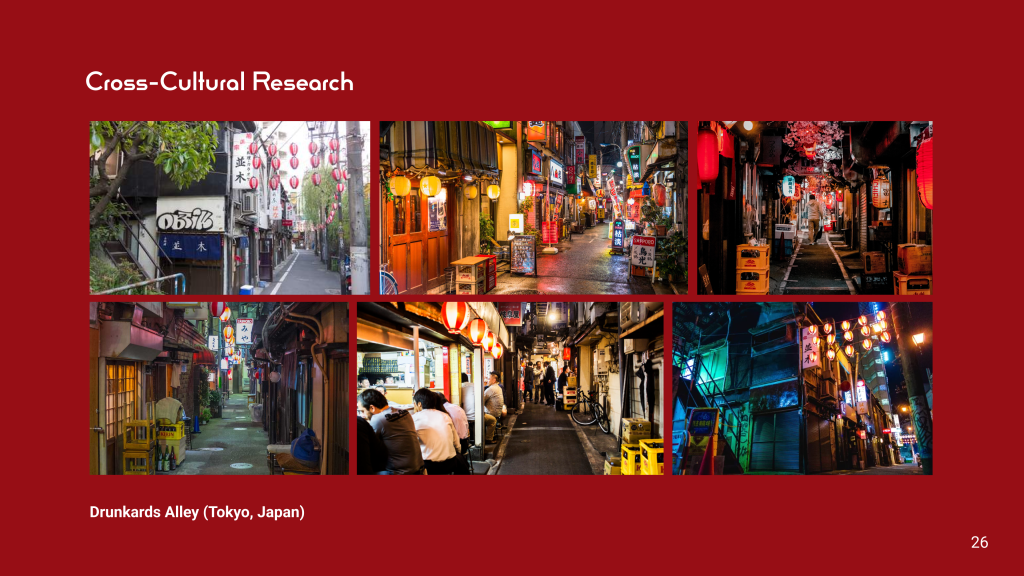
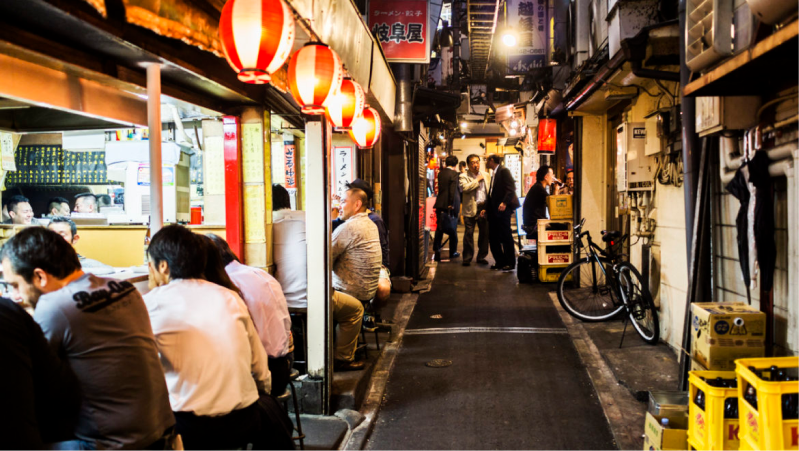
This exploration into how other cultures approach entertainment, specifically nightlife, led me to another Asian country: Japan. Nightlife in Japan, especially for locals, consists of many streets, buildings, and areas, with small bars. These bars are intimate spaces with only 5-10 places to sit.
This was particularly interesting as a major insight from the research showed the need for small group interaction at bars. Though these places are common in Japan, the US nightlife does not have streets like these (apart from a few dive bars), though there is a strong need.
Using these Japanese nightlife experiences, the project explored the micro-bars success, especially their influence on American tourists.


Final Concept
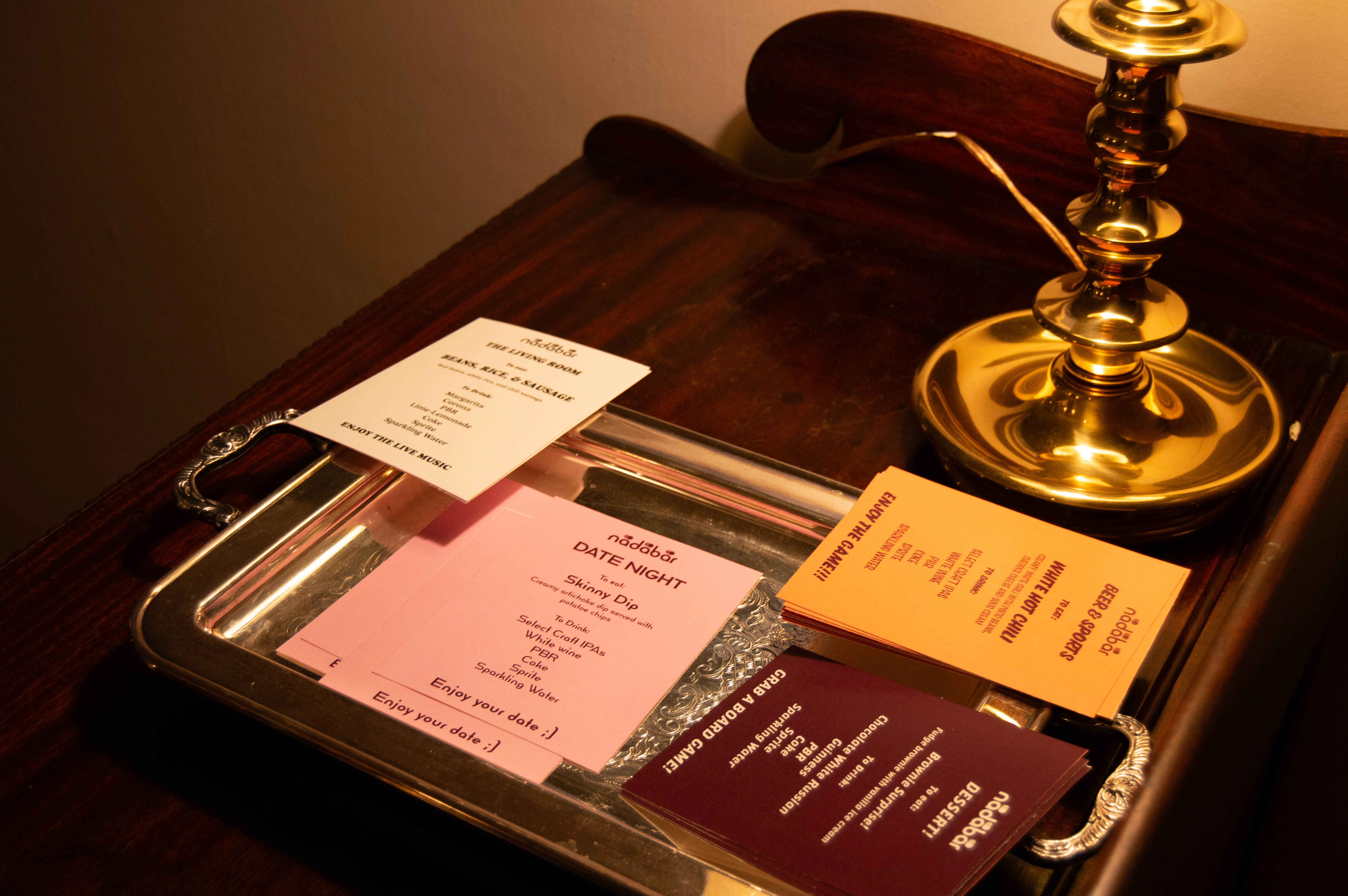
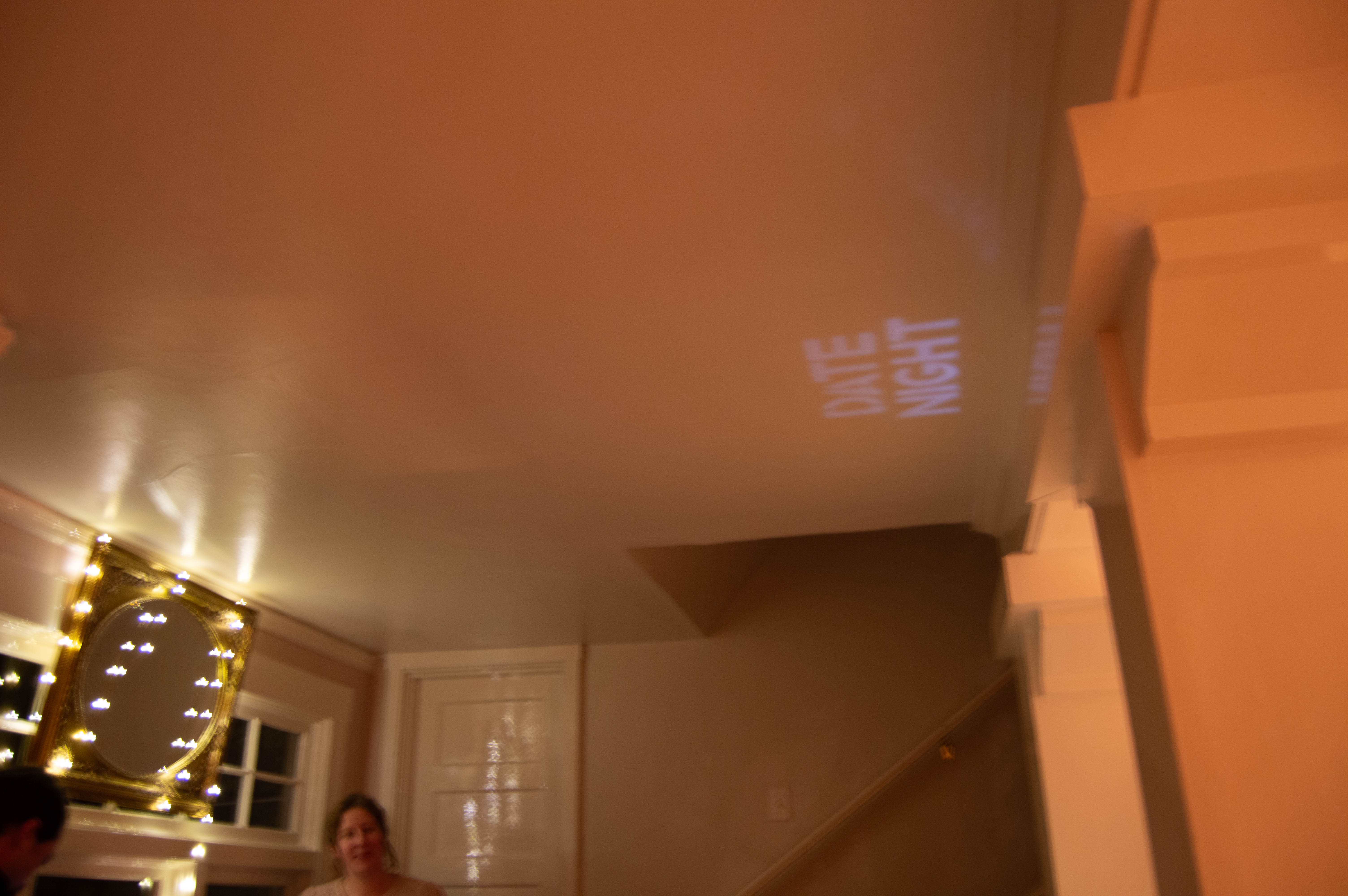
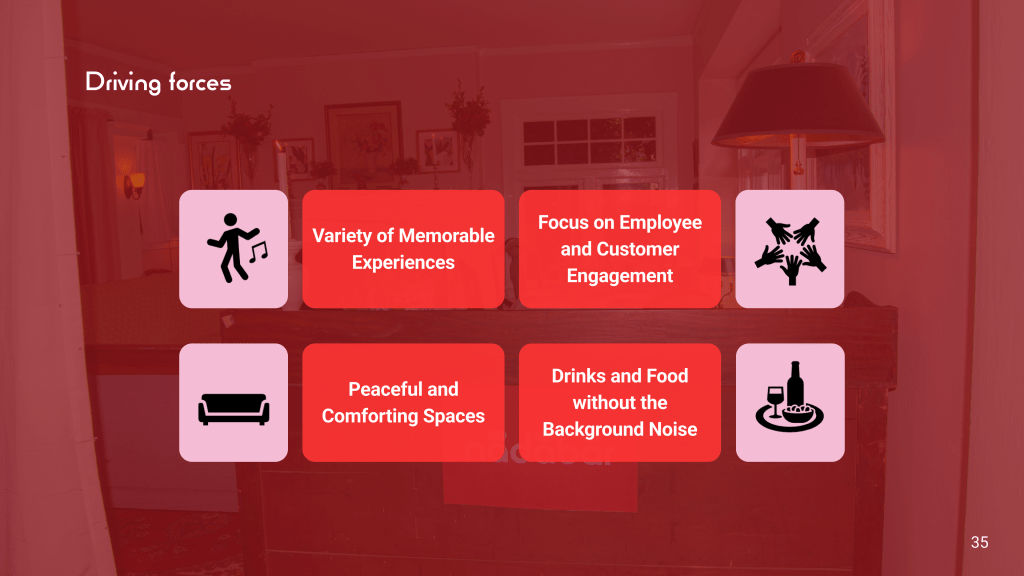
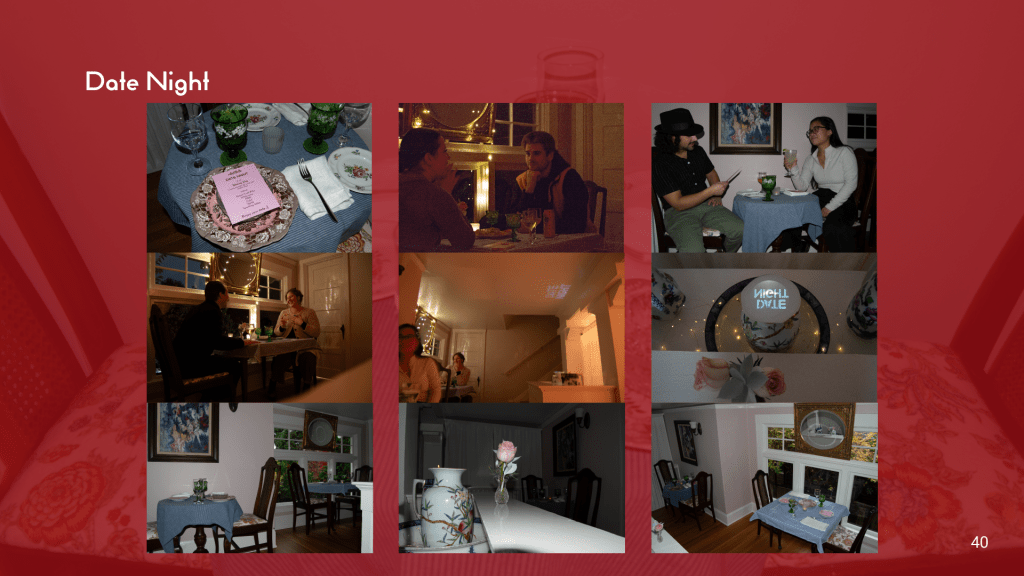
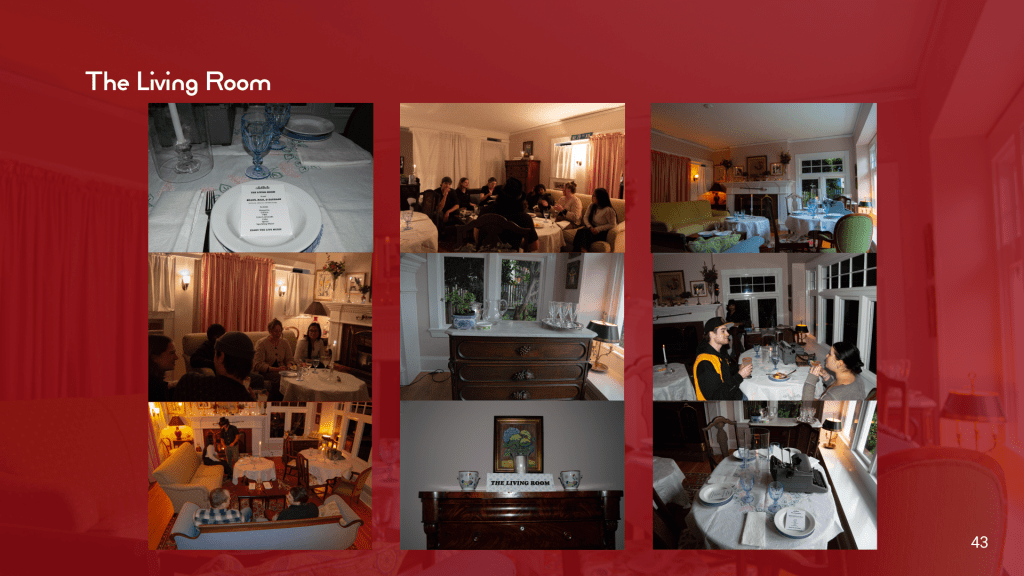
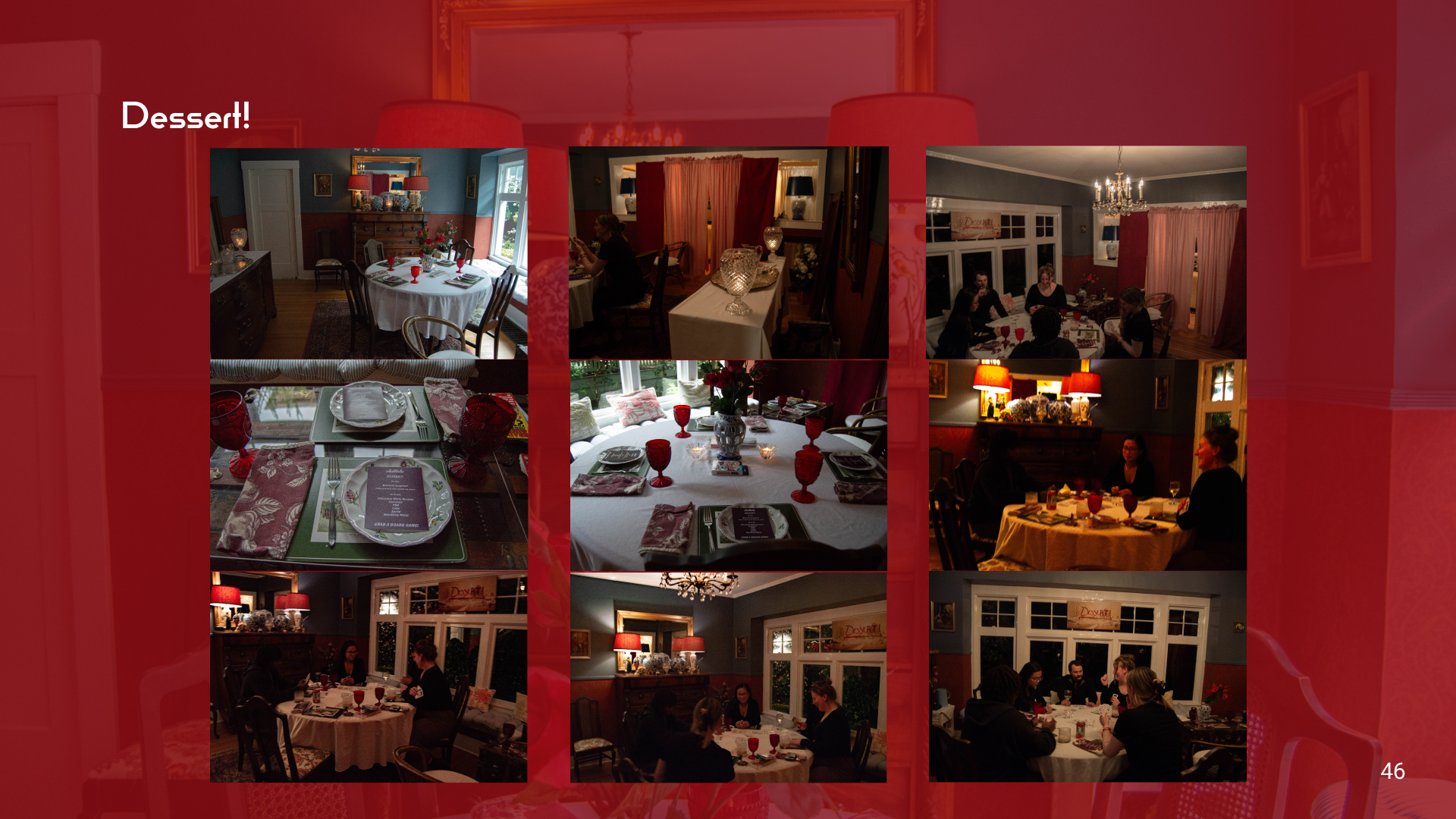
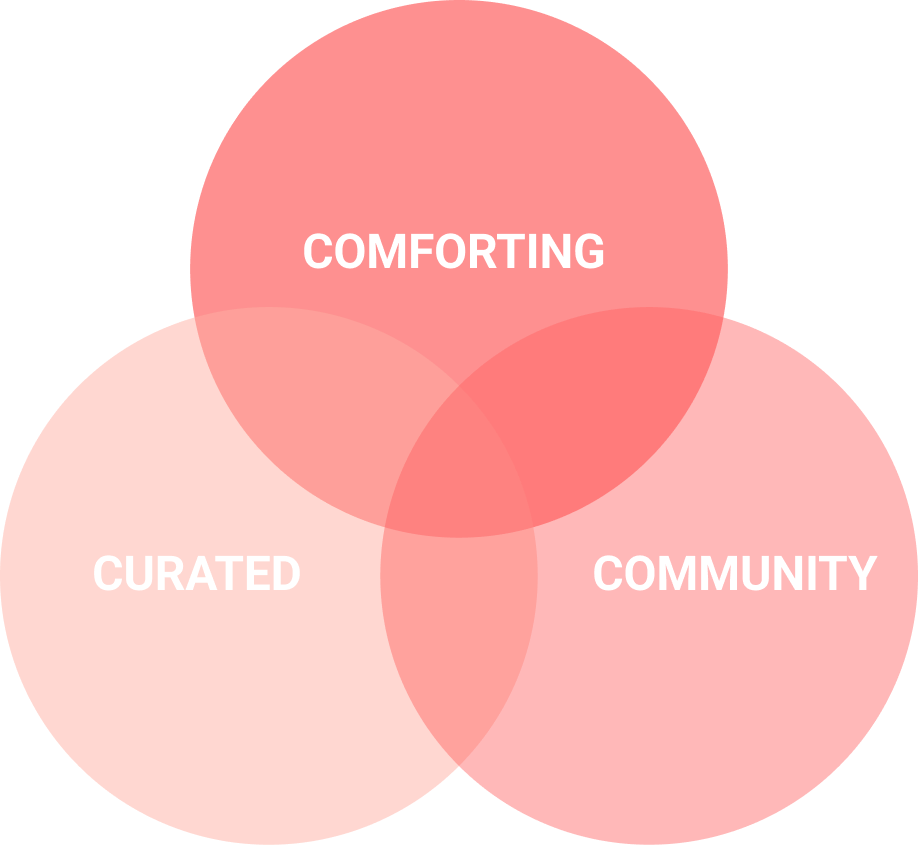
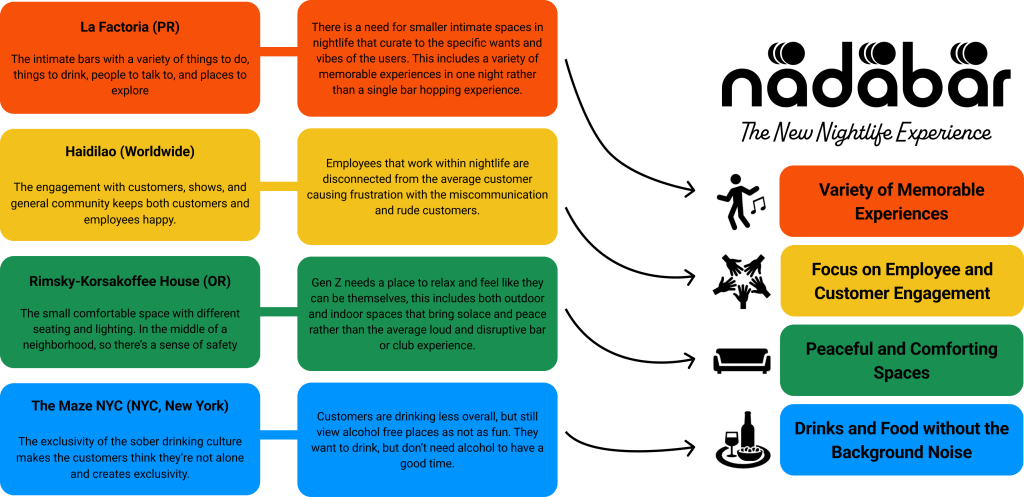
Using the research and competitive analysis, Nadabar was formed. The main focus is on the values of comfort, community, and curated; the main things that Gen Z desires. Each room in Nadabar has a different atmosphere, lighting, furniture layout, food options, drink options, and intimacy level.
 KEIL DESIGN